
Most conference AV goes wrong in the same way. Someone books a ballroom, accepts whatever audio visual package the venue puts in front of them, and finds out on show day that the room was specified for a sales meeting rather than a 300 person general session. The equipment list below is what a working conference actually needs, organised by the decisions that drive it.
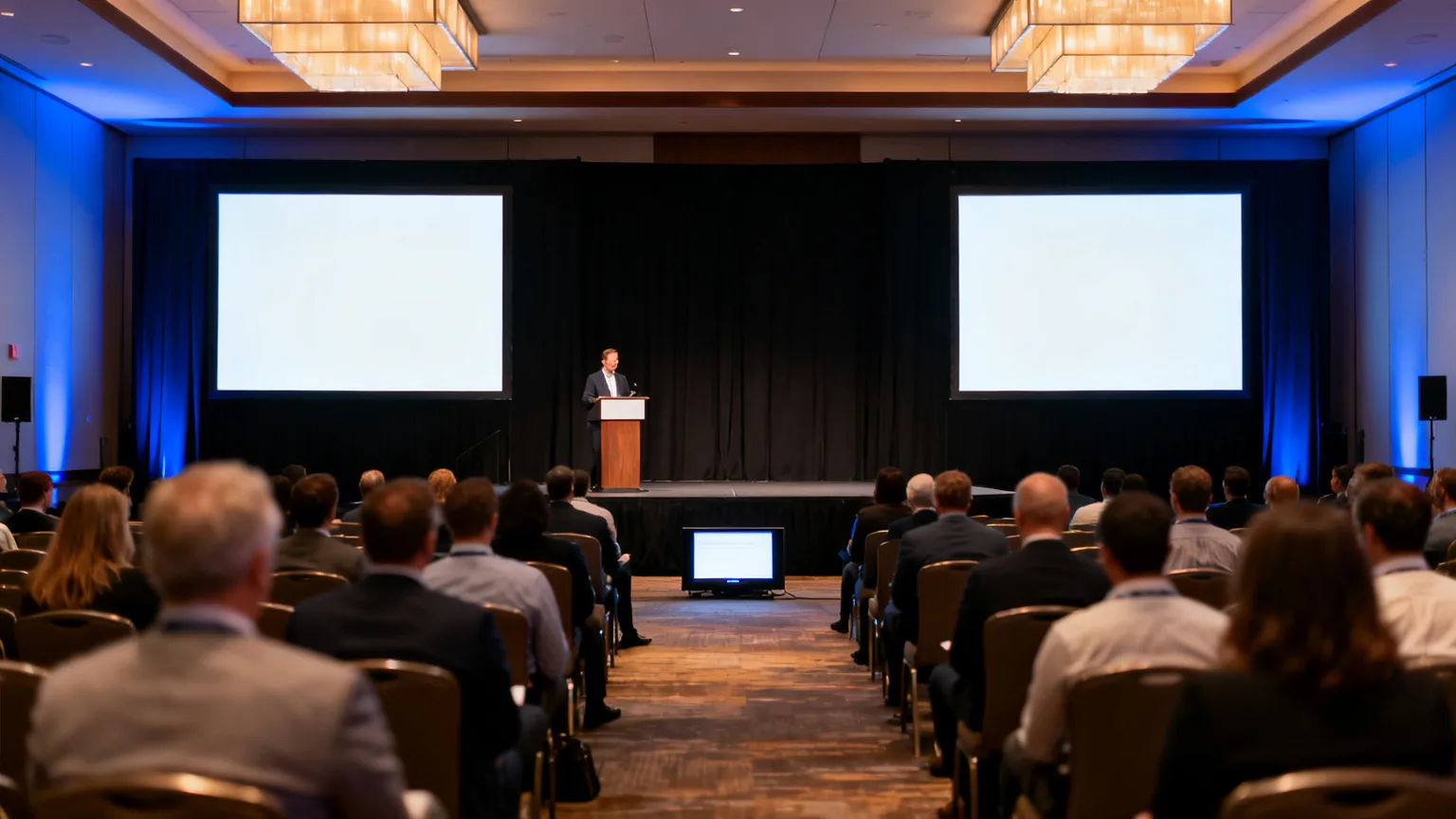
Start with the room, not the list. Every piece of gear follows from two numbers: how many people are in the room, and how far the furthest seat sits from the stage. A 60 person boardroom and a 400 person general session need different sound, different screens and different crew, and no amount of equipment fixes a system specified for the wrong room.
Audio comes first, always. If the room cannot hear the speaker, nothing else on the list matters. Under roughly 75 people a pair of powered speakers on sticks is usually enough. Past that you want a professional sound system properly covered to the room, with delay speakers if the space is deep. Budget at least two wireless handhelds and two lavaliers, plus spares. Panels are where channel counts get missed: four panellists plus a moderator is five microphones, and venues frequently quote two.
Screens are a sightline problem before they are a technology problem. The practical test is whether someone in the back row can read a body copy slide without squinting. For most ballrooms that means a wide 16:9 projection screen, or a LED video wall if the room has heavy ambient light. LED has become the default for general sessions because it stays bright with the house lights up, which matters when people need to take notes.
The confidence monitor is the single most forgotten item. It is the downstage screen that lets a presenter see their current slide without turning around. Every experienced speaker expects one, almost no venue AV package includes one by default, and its absence is noticed within the first two minutes of a keynote.
Lighting is about faces, not atmosphere. Overhead ballroom lighting puts shadows under a presenter's eyes and makes any recording look amateur. Front light on the stage is the baseline. Uplighting and colour on the room walls is the part people think of as event lighting, and it is genuinely effective for galas and receptions, but it is the second priority rather than the first.
If anyone is attending remotely, that is a production, not a webcam. Hybrid and live streaming needs at least one operated camera, a dedicated audio feed from the sound system rather than a room mic, an encoder, and someone whose only job is watching the stream. A laptop on a tripod at the back of the room is how hybrid events get a reputation for being bad.
Breakouts multiply everything. Six breakout rooms running at once is six sound systems, six screens and enough crew to turn them all over between sessions. Breakout room packages are usually simpler per room, but the logistics of simultaneous turnover are what separate a smooth day from a chaotic one.
Staging does more than raise the speaker. A stage deck with proper skirting and a clean backdrop is what makes a hotel ballroom read as a corporate production on camera and in photos. It also solves practical problems: cable management, equipment sightlines, and keeping the front row from looking up someone's nose.
The item that is never on the equipment list is the one that matters most. A technician in the room for the duration. Equipment does not fix itself when a laptop will not hand off, a wireless channel picks up interference, or a presenter arrives with a Mac and no adapter. The difference between a rental and a production is whether someone is standing there when it goes wrong.
A quick way to pressure test any venue AV quote. Look for four things: a confidence monitor, enough wireless channels for your largest panel plus two spares, a dedicated audio feed for any recording or stream, and a named technician on site for the whole event. Quotes missing those four are quoting equipment rather than an event.
We produce corporate conferences, general sessions and multi room programs across Texas. If you have a venue quote in hand and want a second read on whether it covers you, send it over and we will tell you what is thin.