
Two AV quotes for the same event can differ by a factor of three, and the cheaper one is not automatically the better deal. Usually they are quoting different things. Here is what actually moves the number, so you can read a bid properly and compare two of them fairly.
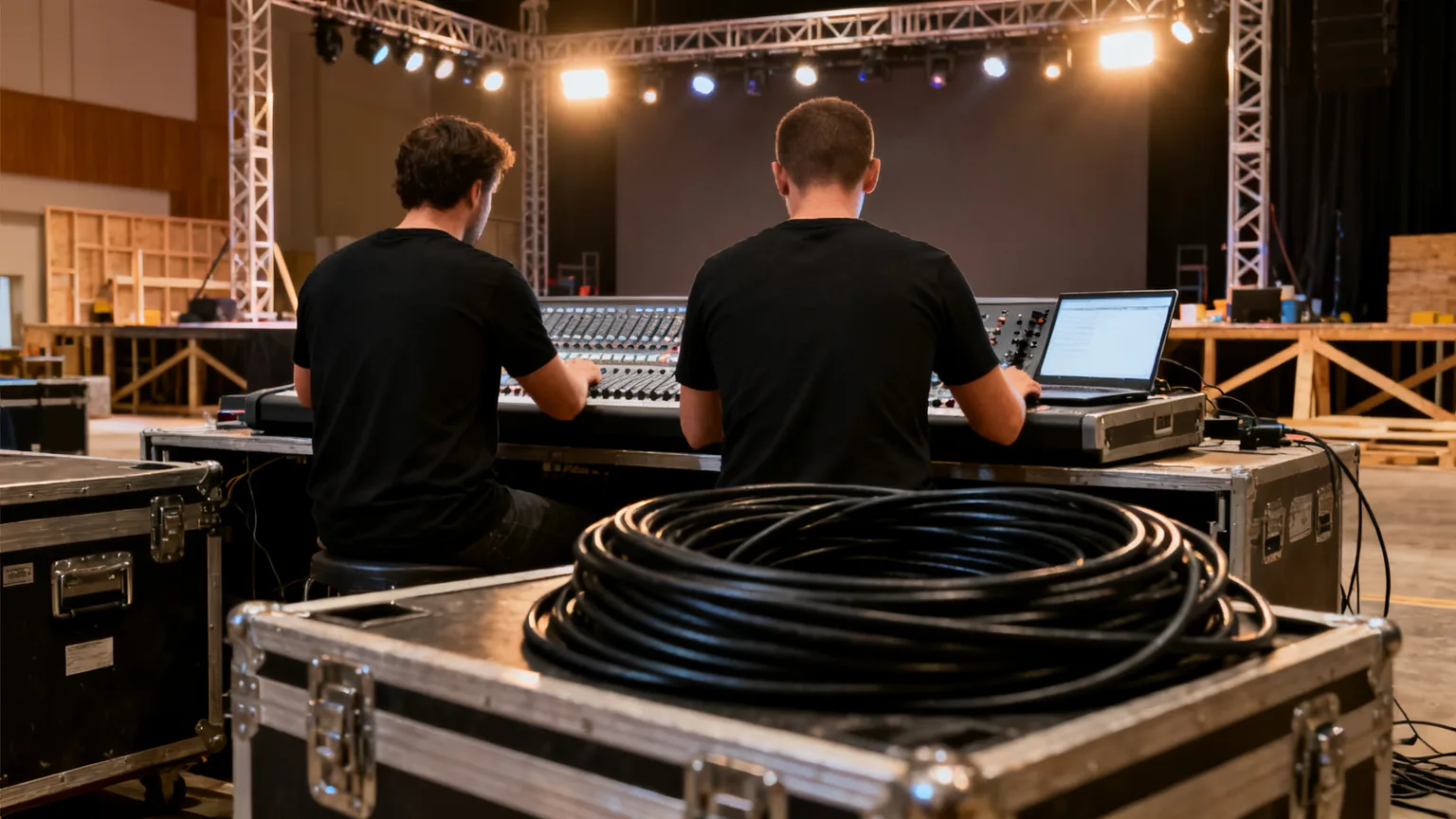
Labour is usually the largest line, not equipment. People assume they are paying for speakers and screens. In practice the gear is a minority of a well built quote. You are paying for the crew who load it in, focus it, operate it live, and strike it afterwards. A quote that looks dramatically cheaper has very often solved that by sending fewer people, which you will feel on show day rather than in the proposal.
Room size drives everything downstream. Doubling the audience does not double the cost, it changes the system class. A bigger room needs more coverage, more power distribution, longer cable runs, bigger screens and more crew to rig it. The jump from a 150 person meeting to a 400 person general session is a step change rather than a slope.
Load-in window is a cost most people never think about. If the venue releases the room at 6am for a 9am start, that is a compressed call with more crew working faster. If you can get in the night before, the same show can be built calmly with fewer people. Asking the venue for an earlier load-in is one of the few genuinely free ways to reduce an AV number.
Redundancy is a choice, and it should be an explicit one. A spare projector, a backup wireless channel, a second encoder on a livestream. None of it is free and none of it is visible if the event goes well. For an internal team meeting you may reasonably decline it. For a shareholder meeting, a product launch or anything being recorded for external use, it is the cheapest insurance in the budget.
Hybrid and streaming are a separate production, not an add-on. Streaming an event properly means cameras, an operator, a clean audio feed, encoding and someone monitoring the output. Quotes that treat it as a small line item are usually describing a webcam, and the gap between those two things is obvious to everyone watching from home.
Multi city programs are where quotes diverge hardest. A company running the same roadshow in four markets can either use four local vendors or one production partner travelling the show. Four vendors is often cheaper on paper and reliably produces four different looking events with four different standards. One partner costs more in travel and less in everything else, including your own time spent re-briefing.
What a complete quote should actually contain. An equipment list specific enough that you could check it, named crew roles with call times, a load-in and strike schedule, a line for redundancy, and a named contact who will be on site. If you cannot tell from the document how many people are turning up and when, it is not a quote you can compare against another one.
Three questions that reveal the difference between two bids. How many technicians are on site and for how long? What happens if a projector or a wireless channel fails during the keynote? Who is my contact on show day, and are they the person I am speaking to now? The answers usually explain the entire price gap.
Where venue in-house AV fits. It is often the right call for smaller meetings in a room the venue knows well. It gets harder to justify as the room grows, as the event gets more visible, or when the production needs to look like the company rather than the hotel. We wrote a longer comparison of in-house versus outside production if you are weighing that specific decision.
We quote corporate AV across Texas and we are happy to look at a bid you already have. Send it over and we will tell you what it covers and what it does not. No obligation and no pitch attached.